
Image
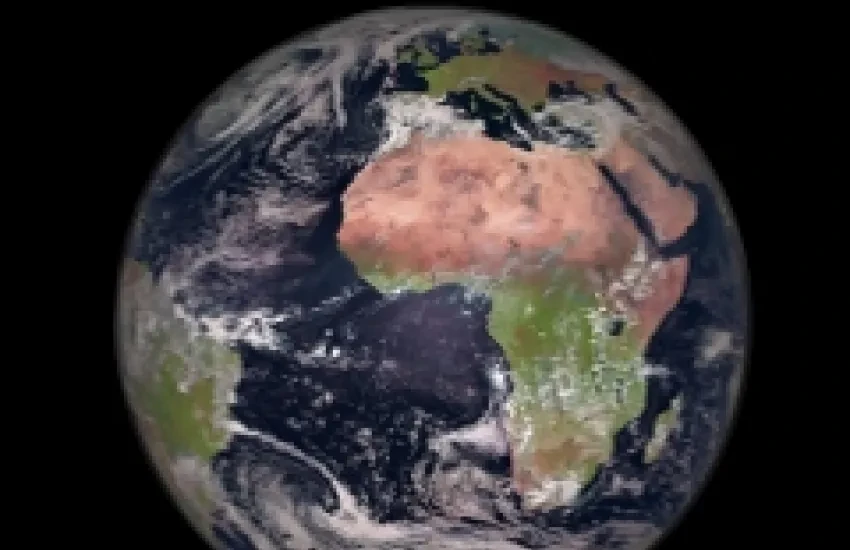
Earth observation (EO) plays a vital role in supporting sustainable development by providing accurate, timely, and cost-effective data to inform decision-making across a wide range of applications, including natural resource management, urban planning, agriculture, and disaster resilience. It enables governments and organisations to support more effective planning and policy-making, helping to protect ecosystems, enhance food security, and manage climate-related risks.
However, EO is not just a tool for observation; it is a foundation for action aligned with the UN Sustainable Development Goals (SDGs), enabling more inclusive and resilient growth.
Several initiatives aim to strengthen partnerships between European and Italian institutions and African counterparts, in order to support local innovation ecosystems across African countries. Through instruments such as the Piano Mattei, the Global Gateway Strategy, and the EU–Africa Joint Space Programme led by the European Commission, investments are directed towards building local capabilities, fostering entrepreneurship, and enabling the adoption of space-based technologies across key sectors.
Planetek Italia’s role in Africa (and beyond)
Planetek Italia has extensive experience in the management of national and international projects across Europe and globally. This experience has been gained through numerous projects entrusted by public institutions at national, regional, and local levels, as well as by the European Commission, the EEA (European Environment Agency), other EU agencies, and international financial institutions such as the Asian Development Bank. These projects include large-scale programmes such as Copernicus, GDA AID Marine & Blue Economy, IRIDE, and EO4SD.
Within the D-Orbit group, Planetek is also a key reference point for a wide range of space activities across the entire space value chain, spanning from space logistics and transportation to satellite in-orbit servicing, midstream systems and software, and downstream services, as well as capacity-building and training programmes.
Our long-standing collaboration within the Copernicus programme positions us among the leading European organisations with extensive experience in the development and provision of downstream services delivered through Copernicus. As an official member of the Copernicus Academy, our expertise also includes the delivery of training courses and the development of capacity-building programmes targeting both domestic and international end users.
A relevant example is provided by the ESA programmes EO4SD–DRR and GDA AID Marine & Blue Economy, where Planetek contributed tools, maps, and training to support Asian, Indonesian, and African institutions in disaster risk reduction, agriculture, and coastal and marine environmental monitoring and protection. This experience now underpins Planetek’s growing role in Africa, combining technical expertise with capacity building to strengthen local ecosystems.
Planetek, D-Orbit & African Space Agency (AfSA) strategic discussion
Pursuing objectives of equitable and sustainable growth as defined in our Benefit Corporation model, Planetek Italia and D-Orbit started a strategic discussion with AfSA aimed at fostering innovation and growth within Africa’s space ecosystem, through:
- Collaborative opportunities with AfSA and African stakeholders to enhance regional capabilities.
- Sustainable Earth Observation (EO) solutions, designed to ensure African ownership and long-term impact.
- Development and empowerment of EO upstream infrastructure and in-orbit servicing autonomy
PROJECTS AT A GLANCE
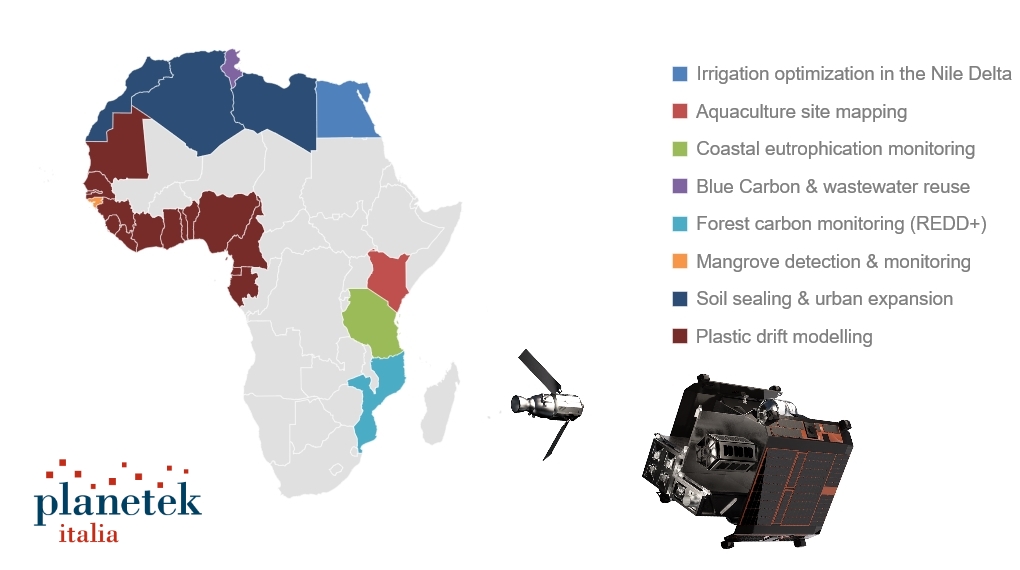
Among the projects currently underway with a strong focus on capacity building are "Continental Innovation" and the "Africa Business Innovation Lab (ABIL)", both implemented under the Africa–EU Space Partnership Programme (AESPP). These projects aim to foster a more balanced and sustainable exchange ecosystem with African institutions in the field of Earth observation, through training activities, skills development, and the promotion of EO-based market solutions.
The ABIL project includes the establishment of an Innovation Lab in Kenya, which will serve as a hub for incubation, acceleration, and specialised training. The lab will support start-ups operating in the EO sector, particularly in areas such as agriculture, resource management, environmental sustainability, and climate resilience—domains where EO solutions can generate significant impact. Within the ABIL project, Planetek Italia plays a central role in capacity building by delivering technical training, mentoring, and support for the design of challenge-based activities that strengthen the local innovation ecosystem and foster the development of practical EO solutions.
In Continental Innovation, the activities are more specifically oriented towards capacity development initiatives designed to empower African private-sector actors—particularly entrepreneurs, researchers, and start-ups—to develop and scale EO-based services. These efforts target a broad range of stakeholders across the African innovation ecosystem and ensure continent-wide outreach through training, mentoring, and matchmaking initiatives.
Read more: